
The Power of Unity: God's Design for Flourishing Life
Imagine the perfect Thanksgiving. The turkey is perfectly cooked, the rolls are rising, pies cooling on the counter, and for once, everything feels peaceful and beautiful. Then chaos erupts—too many cooks in the kitchen, conflicting instructions, toys wheeling through dangerous spaces, and suddenly that peaceful gathering becomes a scene of disorder.
This simple illustration reveals a profound truth: something beautiful can easily turn into chaos when it gets out of order.
From Chaos to Order From the very beginning, God has been in the business of bringing order to chaos. When darkness covered the formless earth, He spoke: "Let there be light." He didn't create from nothing—He brought divine order to what was chaotic. He separated the waters from the land, called forth animals and plants, and established rhythms and patterns.
This divine ordering reached its pinnacle in the Garden of Eden—what theologians call "the Eden ideal." God established a design for humanity, a blueprint for how life was meant to function. And at the heart of this design was something we often overlook or undervalue: unity.
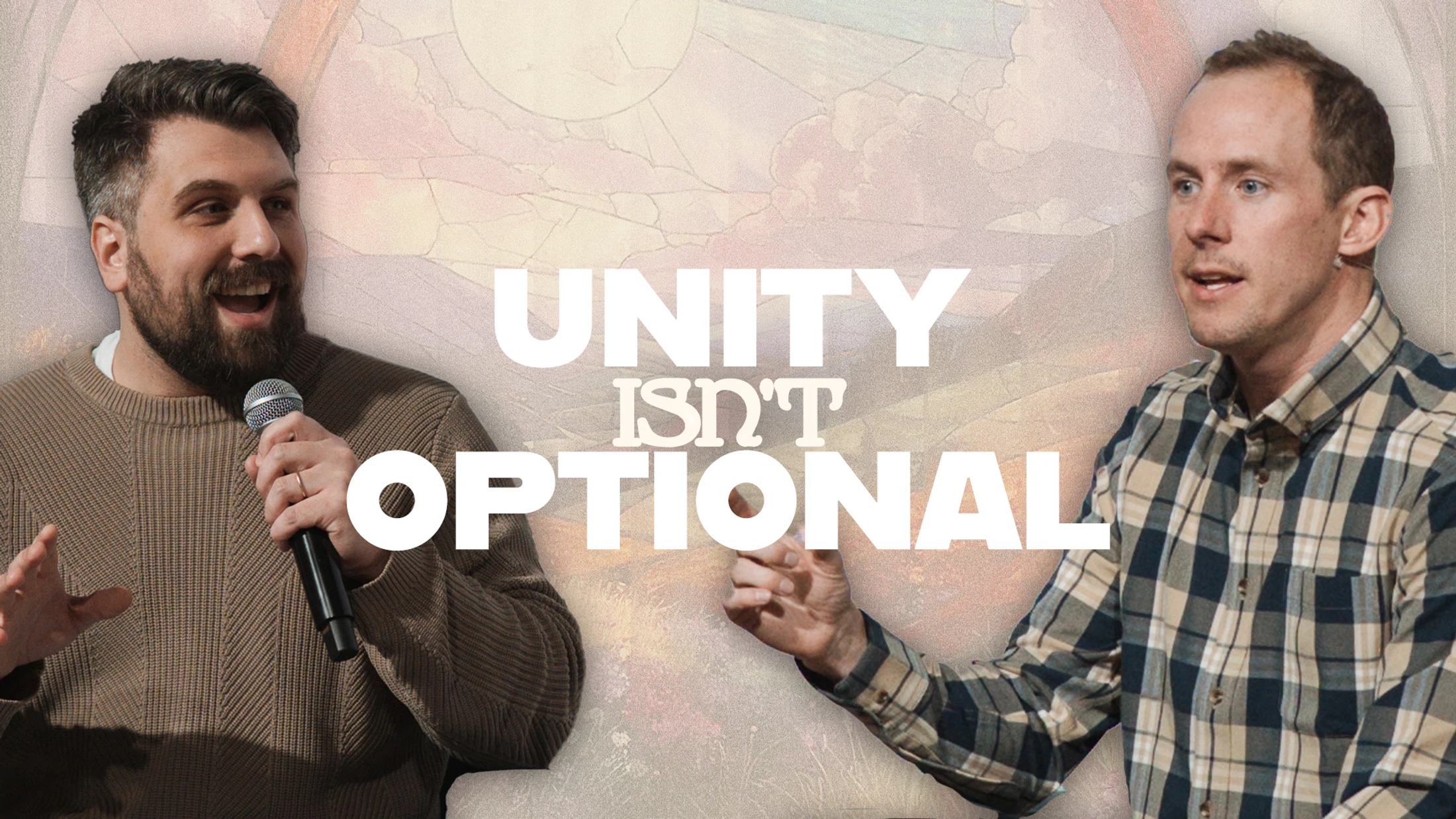
Unity: Not Optional, But Essential Here's the central truth we must grasp: Unity isn't optional. It's God's design.
This isn't just a nice sentiment for getting along with others. Unity is the very oxygen of healthy relationships, healthy churches, healthy families, and healthy communities. Wherever you see broken and fractured relationships in Scripture, you immediately find the opposite of God's good creation—murder, distrust, chaos, and people acting like beasts rather than image-bearers of God.
Jesus Himself made this crystal clear in Matthew 12:25: "Every kingdom divided against itself will be ruined. And every city or household divided against itself will not stand."
These aren't just wise words—they're a fundamental principle of how reality works. Division leads to destruction. Unity leads to flourishing.
A Tragic Tale of Division The story of King David and his son Absalom paints a vivid picture of what happens when unity fractures. It's a story filled with polygamy, incest, sexual abuse, murder, and ultimately a military coup—all stemming from one man's disobedience to God's order.
David violated God's command by taking multiple wives. This single act of rebellion against God's design set off a chain reaction of tragedy. His son Amnon violated his half-sister Tamar. Absalom, Tamar's full brother, murdered Amnon in revenge. Then Absalom fled, and when he eventually returned, reconciliation was half-hearted at best.
But Absalom didn't just nurse his wounds in private. For four years, he stood at the city gates, intercepting people who came with complaints. He would say, "Your claims are valid and proper, but there's no one to hear you. If only I were appointed judge in the land, I would see that you received justice."
He was sowing seeds of division, pitting the people against David. And it worked. The kingdom became divided, civil war erupted, and Absalom died in the conflict.
This ancient story mirrors patterns we see today—in workplaces where people grumble that they could run things better, in churches where congregants criticize leadership behind closed doors, in families where children are turned against parents, in any setting where unity is sacrificed on the altar of personal grievance.
The Root of Rebellion C.S. Lewis famously said that the root of all sin is pride. But Scripture gives us an even fuller picture. In the Garden, Eve looked at the forbidden fruit and decided for herself what was good and desirable. She took wisdom and judgment into her own hands rather than trusting God's wisdom.
This is the pattern of every sin since: we determine in our own minds what is good for us, what we desire, and we act on it—independent of God's design and wisdom.
Absalom was justified in his frustration toward David. Justice should have been done for Tamar. But instead of humbling himself and calling David to be the leader he was meant to be, Absalom took justice into his own hands. He decided he could lead better than his father.
The Path Forward So how do we fix this root of rebellion? How do we move from division to unity?
First Peter 2:13-17 gives us clear instruction: "Submit yourselves for the Lord's sake to every human authority... Show proper respect to everyone. Love the family of believers. Fear God."
Notice that key phrase: "for the Lord's sake." We don't submit to authority because people are inherently worthy of our submission. We submit because we love the order God has established. We submit out of reverence for God, not reverence for imperfect human beings.
The passage goes on to say we must "show proper respect to everyone." Not just those we agree with. Not just those who are kind to us. Everyone. The difficult coworker. The family member with opposing political views. The driver cutting you off on the highway. Everyone.
This means wanting the best for people, building them up rather than tearing them down. The best thing we can desire for anyone is that they finish their race well and hear Jesus say, "Well done, good and faithful servant."
Following Christ's Example The ultimate model of submission and unity is Jesus Himself. First Peter 2:21-25 reminds us that "Christ suffered for you, leaving you an example that you should follow in his steps. He committed no sin, and no deceit was found in his mouth. When they hurled their insults at him, he did not retaliate."
Jesus, who was equal with God the Father, submitted Himself to the Father's plan. In the Garden of Gethsemane, He prayed, "Not my will, but yours be done." It was obedience born of love—love for the Father and love for us—that held Jesus to the cross.
Within the Trinity itself, we see the pattern of unity: the Father loves the Son by including Him in His plan, and the Son loves the Father by being obedient to that plan. Even in perfect equality, there is beautiful, life-giving order.
The Power of a United House Jesus said a house divided cannot stand. The inverse is equally true: a house united will stand strong. It will flourish. It will be healthy. It will be able to charge the gates of hell and spread the light of Christ into darkness.
What would your world look like if you pursued unity more intentionally? What would your marriage look like? Your workplace? Your church? Your friendships?
The good news is that Jesus is Lord. He alone has the authority to make wrong things right. When we submit to His lordship—not just in word but in how we relate to the authorities and relationships He's placed in our lives—we participate in the only way this broken world gets healed.
The world isn't fixed by getting rid of bad people or by taking justice into our own hands. It's healed through the work of Jesus on the cross and our response to that work—following Him, submitting to His leadership, and living according to His design.
Unity isn't just about getting along. It's about aligning ourselves with the God who brought order from chaos, who established patterns for flourishing, and who desires relationship with us so deeply that He sent His Son to die so we could be united with Him.
May we lay down our wills, our egos, and our plans at the foot of the cross and say yes to God's design—for our lives, our relationships, and His church.