
Standing in Authority When Life Feels Out of Control
Life has a way of reminding us just how little control we actually have. One moment everything feels manageable, and the next, circumstances spiral in directions we never anticipated. For many of us, the loss of control triggers panic, resistance, and a desperate scramble to regain our grip on situations that seem to be slipping through our fingers.
But what if there's a different way to live? What if we could feel completely out of control and yet still stand firmly in authority?
The Illusion of Control
We all love control in different areas of our lives. Some people plan their restaurant orders before leaving home, knowing exactly what they'll eat before they arrive. Others create detailed life plans, mapping out careers, relationships, and futures with precision. There's nothing inherently wrong with planning, but when our need for control becomes so intense that we resist every change and cling desperately to our own plans, we risk losing something far more valuable than predictability—we risk losing faith itself.
The truth is, our feelings don't determine our authority. The source of our authority does.
Authority Comes from Above
In Luke chapter 10, we find a remarkable scene. Seventy-two followers of Jesus return from ministry assignments, excited and amazed. "Lord, even the demons submit to us in your name," they report. Jesus responds by affirming both their experience and its source: "I have given you authority to trample snakes and scorpions and to overcome the power of the enemy."
Notice the critical phrase: "I have given you." Authority isn't earned through spiritual performance or emotional intensity. It's delegated. It comes directly from Jesus himself.
The Apostle Paul later expands this understanding in his letter to the Ephesians. He reminds believers that the same power that raised Jesus from the dead is available to them. But he goes further, describing believers as seated with Christ in heavenly realms—not in the nosebleeds, but right next to Jesus at the right hand of the Father.
This isn't just poetic language. It's positional reality. Followers of Jesus aren't crawling toward heaven begging for scraps. They've been given reserved seats in the place of authority.
How Jesus Used His Authority
Throughout the Gospels, Jesus demonstrates what authority actually looks like in practice. When storms threatened to capsize the boat, He didn't panic or negotiate with the weather. He simply spoke: "Peace, be still." When confronting demonic oppression, He didn't yell or bargain. He commanded unclean spirits to leave. When His friend Lazarus died, He spoke life back into a dead body.
Jesus used His voice. His authority came through His words.
For us, this translates into prayer—not anxious, information-heavy prayers where we present God with spreadsheets and solutions, but prayers rooted in identity, spoken from a position of authority.
Becoming a Victorious, Impactful Prayer Warrior
What does it mean to pray with the authority we've been given? Three principles emerge:
First, pray from identity, not with information. Too often our prayers sound like business presentations: "God, here's what's happening. Here are my proposed solutions. Please select option A, B, or C." But victorious prayer starts differently. It begins with: "God, this is who I am because of You. This is what Your Word says about me."
The enemy's primary strategy is to confuse us about our identity. If he can make us forget we're heirs of Christ, seated in heavenly places, he can convince us of anything. Jesus faced this exact tactic in the wilderness. Every temptation began with "If you are the Son of God..." The devil wasn't challenging Jesus' hunger; he was challenging His identity. Jesus responded by anchoring in who He was and praying Scripture.
Second, pray as victors, never victims. Crisis tempts us toward victim prayers: "God, why does this always happen to me? The enemy is destroying everything. I don't know if I can survive this."
Consider the story from Numbers 13-14. Twelve spies explored the Promised Land. Ten returned with victim reports: "The people are giants. We're doomed. We should have stayed in Egypt." But Joshua and Caleb saw the same situation through a different lens: "Yes, the land is big and the people are big, but our God is bigger."
Same circumstances. Different prayers. One group prayed from survival mode; the other prayed from victory.
Your prayer life reveals whether you think you're fighting for survival or whether you know you've already won. Instead of "God, I'm overwhelmed," try "God, this is heavy, but You are greater in me than what's coming against me." Instead of "The enemy is attacking everything," declare "The enemy has already been disarmed and defeated at the cross."
Third, pray from position, not panic. Jesus never panicked. Before Lazarus emerged from the tomb, Jesus thanked the Father—showing gratitude before the outcome. Why? Because authority knows its source and prays like it knows its source.
Position-based prayer doesn't plead with darkness from weakness. It declares light from delegated authority. At the name of Jesus, every knee will bow—including the ruler of this world.
The Prayer Jesus Taught
When Jesus taught His disciples to pray, He modeled this victorious approach. "Our Father" begins with identity—a declaration that we belong to Him as sons and daughters. "Your kingdom come, Your will be done" immediately follows with submission. We don't demand our way; we surrender to His.
This is the paradox: true authority flows from humble submission. Before we can stand on the authority of Christ, we must submit to the authority of Christ.
Letting Go to Stand Firm
The invitation before us is challenging. God is asking us to loosen our grip on the areas we've been controlling most tightly—our careers, relationships, health, finances, futures. He's inviting us to dinner without telling us where we're going, asking us to trust Him with things that are already His to begin with.
When we feel out of control, we can still stand in authority. Not because of our strength, but because of His. Not because we've earned it, but because He's delegated it. Not because we have all the answers, but because we know the One who does.
The question isn't whether we have authority. The question is whether we'll use it—through prayer, through surrender, through trusting the One who seated us beside Him in heavenly places.
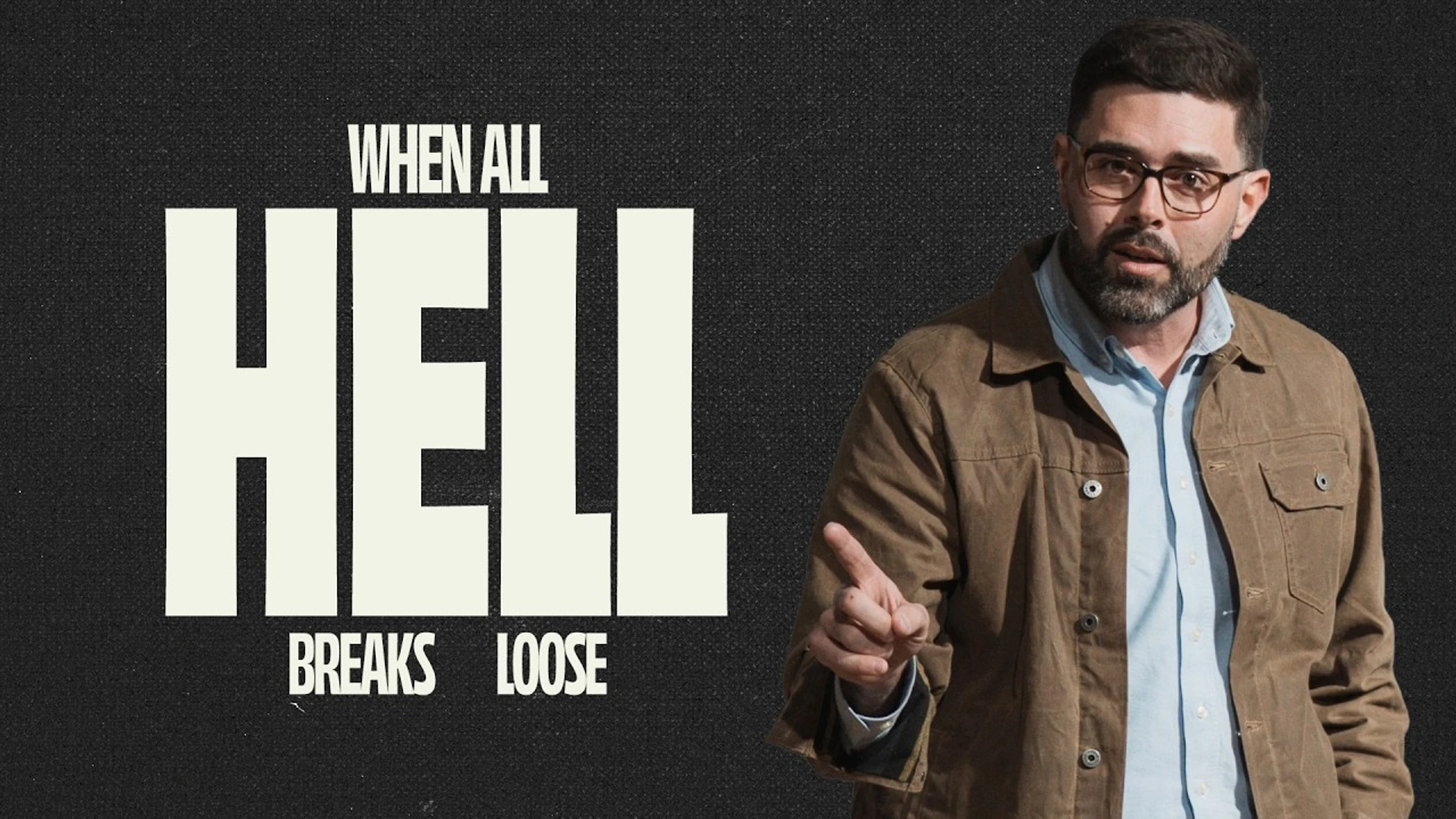
Even when all hell breaks loose, we can stand firm. Not in our own power, but in His.