
Don't Miss the Forest for the Trees: Finding Rest in God's Timing
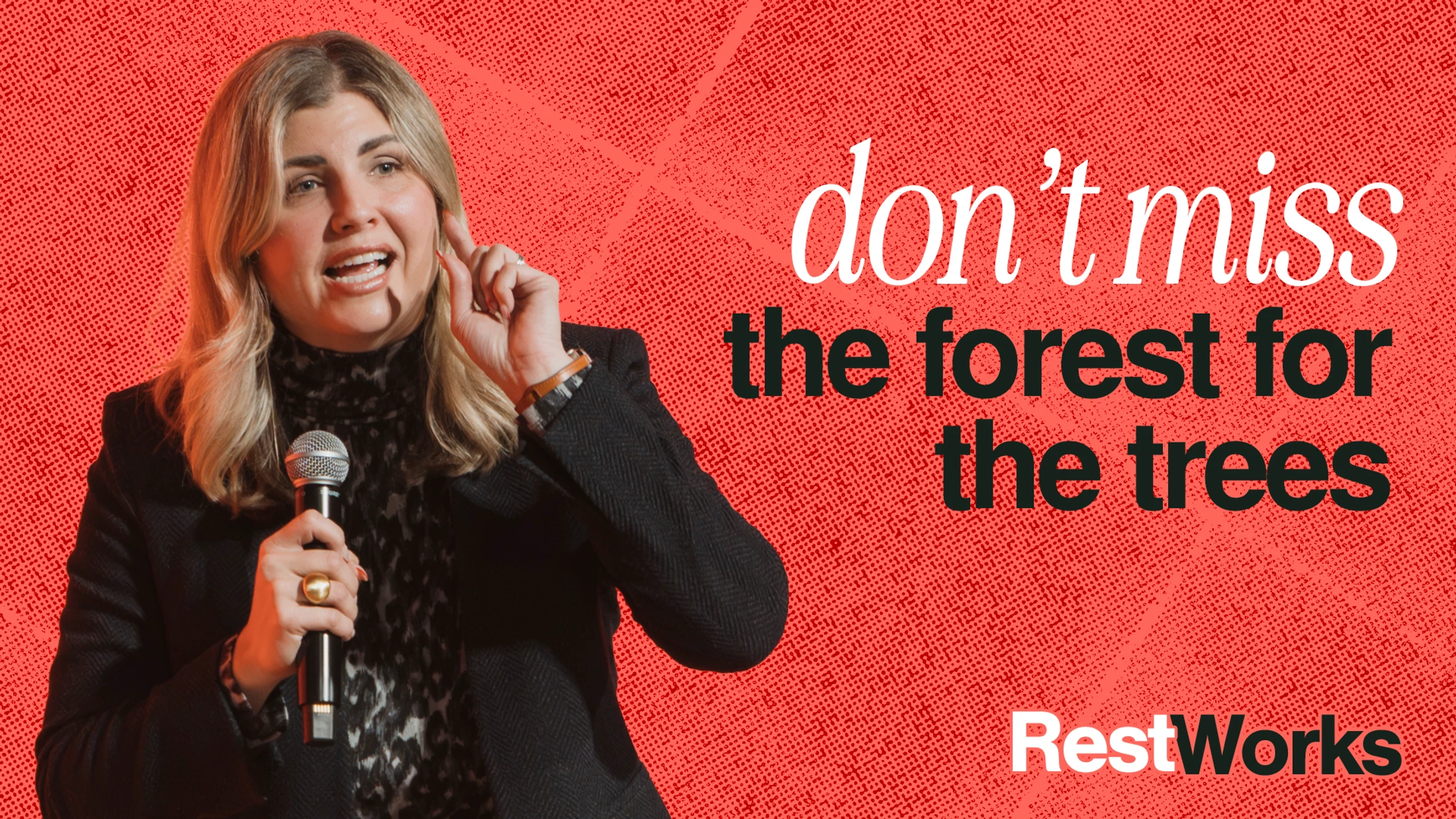
There's something profoundly liberating about surrendering your carefully crafted plans and simply enjoying the journey you're actually on.
Picture this: You're hiking through beautiful woods, determined to reach a specific destination. You've planned it perfectly, mapped it out, told yourself this is what the day needs to be. But after miles of trekking, you realize that iconic viewpoint you were chasing is still four miles away—and you're already exhausted. You have a choice: push everyone to the breaking point to get what you planned, or surrender the agenda and enjoy the forest you're already in.
What if the "wrong" trail still leads to the right view?
This tension between our plans and God's purposes isn't new. It's as old as Genesis itself, woven into the story of Abram and Sarai, two people who heard God's voice and stepped out in faith—only to spend decades wondering if they'd heard Him correctly.
The Long Hike of Faith
When God called Abram to leave everything familiar and journey to "a land I will show you," the man was 75 years old. Sarai was 65. These weren't young adventurers setting out with boundless energy. They were well into their senior years, being asked to walk away from home, security, and certainty.
God's promise was clear: "I will make you into a great nation." There was just one problem—Sarai couldn't have children.
For the next decade, they hiked approximately 1,200 miles through desert terrain. They survived famine, regional warfare, and the constant physical exhaustion of packing up tents and moving every few weeks or months. They acquired wealth, land, and servants. But month after month, year after year, Sarai's womb remained empty.
Can you imagine the mental anguish? The questions that must have plagued their minds in year three, year five, year eight? What are we doing wrong? Is there something wrong with us? Did we mishear God?
When God's Silence Feels Like Absence
Ten years into their journey, God spoke again. He took Abram outside and said, "Look up at the sky and count the stars if you can. That's how many descendants you will have."
It was a beautiful promise. But for Sarai, watching another month pass with no pregnancy, beautiful promises can feel like cruel jokes.
This is where we're most vulnerable—in the gap between God's word and our current reality. It's in this space that the enemy whispers his oldest lie: God is withholding from you. He's preventing you from having what you deserve. He's cruel.
Sarai believed the lie. In Genesis 16, she decided God needed her help. "The Lord has prevented me from having children," she told Abram. "Sleep with my servant Hagar. Maybe I can have children through her."
It seemed logical. It felt right. It might work.
Abram agreed.
And everything got worse.
The Cost of Forcing God's Hand
Hagar became pregnant, and immediately the household erupted in conflict. Comparison, resentment, bitterness, and broken relationships—these are always the fruits of shortcuts. When we try to help God fulfill His promises our way, someone always gets hurt. Usually, it's us.
But here's what we rarely acknowledge: when we force solutions, we don't just complicate our own lives. We create more work for God.
Now God had to deal with Hagar's pain, Ishmael's future, and conflict that would ripple through generations. All because two people got their role confused. Their job was never to produce the promise. Their job was simply to trust God for it.
From the time they forced God's hand in Genesis 16 until God spoke to them again in Genesis 17, thirteen years of silence passed. Thirteen years of living with a solution God never asked for. Thirteen years of Sarai watching her husband raise a son who wasn't hers, magnifying the original ache a thousand times over.
Some pain doesn't have to exist. Some healing doesn't have to take as long. And some weight doesn't have to be carried—if we'll just stop trying to help God.
The Breakthrough of Surrender
Twenty-four years after the original promise, God appeared again. Abram was now 99. Sarai was 89. They had hiked through hills and heartbreaks for nearly a quarter-century.
But something had changed. They had changed.
God changed their names—Abram to Abraham (father of many nations) and Sarai to Sarah (mother of nations). Before they ever did anything for Him, God spoke identity over them. Because who you are is not what you do. Your becoming takes time.
Then comes Genesis 18, and we find Abraham in a completely different posture than we've seen him in six chapters. He's not striving. He's not scheming. He's not hiking.
He's sitting.
"The Lord appeared to him by the oaks of Mamre, as he sat at the door of his tent."
While Abraham sat, three visitors appeared (many believe this is the first picture of the Trinity in Scripture). And what did Abraham do? He ran to serve them. He worked hard at bringing them refreshment and rest. He prepared food, washed their feet, and stood by while they ate.
And it was there—while Abraham hosted the Lord instead of chasing the promise—that God said, "About this time next year, Sarah will have a son."
Rest Works
Do you see the shift? For 24 years, they worked at making God's plan happen. But breakthrough came when they simply worked at letting God rest among them.
We work so hard trying to find rest for ourselves. But Scripture shows us that if you want rest, work at bringing the Lord rest. Work at hosting Him. Work at sitting with Him.
Breakthrough happens when we stop chasing the hope, the wish, the desire, the goal. Breakthrough happens when we simply start making space for God to dwell with us.
One year later, at age 100 and 90 respectively—25 years after the original promise—Isaac was born. They wanted a son. God wanted surrender. They wanted a name. God wanted a nation.
Sarai thought God was preventing it. But maybe God had strategic timing, strategic placement, and a strategic will. Without Isaac being born at exactly that moment in history, our Savior wouldn't have been born at the exact time we needed Him.
Your Hike in 2026
God is looking for people who will surrender to His time, His place, and His needs. People who won't miss the forest for the trees. People who understand that rest isn't passivity—rest is active trust that works.
So here's the question: What are you chasing this year that God is asking you to surrender? What timeline are you forcing that He's asking you to trust? What solution are you creating that's actually making more work for Him?
Your marriage takes time. That child you're praying for takes time. Your finances, your well-being, your character—they all take time. The becoming that God is after in your life cannot be microwaved.
Sit still before you sprint. Turn off the distractions. Make your home an altar. Host the presence of God. Serve where He sends you.
Because when Abraham began to serve instead of strive, everything shifted.
The same could be true for you.
Don't miss your forest for the trees. The view you're looking for might be waiting on the path you didn't plan to take—but only if you're present enough to see it.